Review: All I Need is Coffee and My Dog Design
As a designer who spends more time staring at stitch simulations than actual fabric, I have learned that not every cute graphic translates well to thread. We see thousands of T-Shirt Designs and digital assets flood the market weekly, but only a handful possess the structural integrity required for high-quality embroidery. Today, I am taking a close look at All I Need is Coffee and My Dog, a popular motif that promises warmth and personality. I am evaluating it not just as a pretty picture, but as a functional machine embroidery design ready for real-world application in my shop.
First Impressions: Mood and Visual Personality
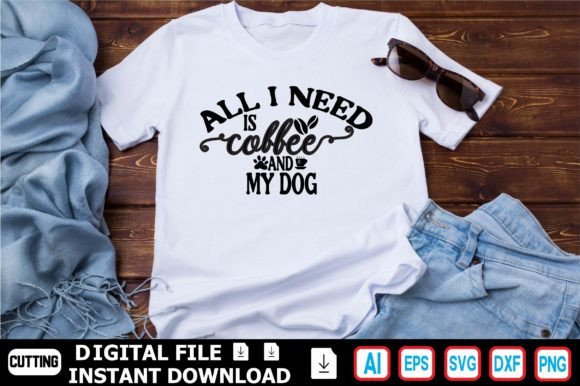
The first thing that strikes me about All I Need is Coffee and My Dog is its inherent coziness. It captures a specific, relatable mood that resonates deeply with modern consumers. The layout typically balances typography with illustrative elements, creating a harmonious composition that feels intentional rather than cluttered. For an embroidery project, this balance is critical. If the text overwhelms the dog illustration, or vice versa, the design loses its charm. In this case, the visual personality suggests comfort, loyalty, and a slow morning routine. It is the kind of imagery that invites touch, which is exactly what we want from a handmade product.
However, seeing it as a vector or PNG on a screen is different from imagining it stitched out. The clean lines of the Graphics source file suggest it could work well, but I immediately start questioning the complexity. Are there too many tiny details that will get lost in the fabric texture? Is the font thick enough to hold a satin stitch without breaking? These are the questions I ask before I even open my digitizing software or hoop up my machine.
Real-World Application: From Screen to Stitch
To truly test the viability of All I Need is Coffee and My Dog, I imagine placing it on a few standard items I produce for my small business. Let’s start with a custom embroidered tote bag. This is a classic use case. The design’s theme fits perfectly with the casual, everyday utility of a canvas tote. When I visualize the stitching here, I look for clarity. The dog silhouette needs to be distinct against the weave of the canvas. If the original embroidery file relies on subtle gradients, they will vanish. Instead, I look for bold shapes that can be filled with solid colors.
Next, I consider sweatshirt embroidery. This is where the "coffee" aspect shines. A cozy fleece or cotton blend sweatshirt is the natural habitat for this design. Here, the challenge shifts to fabric texture. Fleece can swallow small details. If All I Need is Coffee and My Dog includes fine whiskers or intricate lettering serifs, they might puff up or disappear into the nap of the fabric. I would likely recommend simplifying any overly complex elements or using a cutaway stabilizer to ensure the design sits on top of the fabric rather than sinking in.
I also think about baby embroidery. Parents love personalized gifts, and a onesie with this motif is undeniably cute. However, scale becomes the primary concern. A design that looks perfect on an adult XL tee might be overwhelming on a infant garment. I would need to resize the design carefully, ensuring that the stitch density does not become too high for the delicate fabric, which could cause puckering or discomfort against sensitive skin.
Technical Considerations and Fabric Compatibility
One of the most critical aspects of reviewing a design like All I Need is Coffee and My Dog is understanding its technical limits. The product description notes that you receive a ZIP folder with AI, SVG, DXF, EPS, and PNG files. It is important to clarify that these are primarily vector and raster graphics formats, not native machine embroidery formats like PES or DST. This means if you are an embroiderer, you will likely need to digitize this design yourself or hire a digitizer to convert these design assets into a stitch file. This is a crucial distinction for buyers who expect a plug-and-play digital embroidery file.
If you are digitizing this yourself, pay close attention to stitch types. The coffee cup might benefit from a smooth satin stitch to mimic the ceramic shine, while the dog’s fur might require a textured fill stitch to add depth. Be wary of long runs of satin stitch in the lettering; if the font is thin, it may pull the fabric. Using a running stitch for outlines can help define shapes without adding excessive bulk.
Fabric choice dictates success. On dark fabric, you must ensure your thread colors have enough contrast. A light-colored dog on a navy hoodie works beautifully, but a brown dog on a black shirt might look muddy. Always test your thread colors on scrap fabric first. Additionally, consider the hoop size. If the design is wide, ensure your machine’s hoop can accommodate it without re-hooping, which can lead to alignment issues.
Commercial Viability for Etsy Sellers and Craft Businesses
For the Etsy seller or craft business owner, All I Need is Coffee and My Dog has strong commercial potential. It taps into two massive markets: pet lovers and coffee enthusiasts. This crossover appeal increases the likelihood of buyer engagement. When creating listings, use high-quality printable mockup images to show the design on various products. Show it on a mug, a tote, and a shirt. This helps customers visualize the finished product and increases perceived value.
However, professionalism is key. A poorly stitched version of this design can damage your brand consistency. Ensure that your tension is correct and that there are no loose threads. Customers associate the quality of the embroidery with the quality of your entire shop. A clean, crisp execution of All I Need is Coffee and My Dog builds trust and encourages repeat business. It transforms a simple graphic into a premium personalized gift.
Practical Designer Notes for Best Results
- Test on Scrap First: Never run a new design on your final garment without a test stitch-out. Check for registration errors and thread breaks.
- Stabilizer Selection: Use a cutaway stabilizer for stretchy fabrics like t-shirts and knits to prevent distortion. Use tear-away for stable woven fabrics like tote bags.
- Check Licensing: Since the provided files are SVG/AI/PNG, confirm the license terms for commercial use. If you are selling the physical embroidered item, ensure the graphic license allows it. If you are selling the digitized embroidery file, you must create the stitch file yourself and ensure you have rights to distribute the derivative work.
- Simplify for Small Hoops: If making an embroidered patch or a hat, reduce the design size and remove tiny details that cannot be stitched at a small scale.
- Contrast is King: Ensure your thread colors stand out against the fabric. High contrast improves readability and visual appeal.
In conclusion, All I Need is Coffee and My Dog is a charming concept with strong market appeal. While the provided files are graphics rather than native embroidery formats, they serve as an excellent foundation for digitization. With careful attention to stitch density, fabric choice, and technical execution, this design can become a standout piece in your small shop product lineup. It is a reminder that successful embroidery is not just about the image, but about how that image interacts with the thread and fabric to create a tangible, lasting impression.