I Was Made to Save Animals Graphics for T-Shirt Designs
As a brand designer who has spent the last decade helping local businesses find their visual voice, I approach every new graphic design asset with a critical eye. It is not enough for a design to simply look good on a screen; it must perform in the real world. Recently, I evaluated I Was Made to Save Animals for a potential client project involving a boutique ethical clothing line and a local animal shelter fundraiser. My goal was to determine if this asset could carry the weight of professional brand identity work or if it was merely a decorative afterthought.
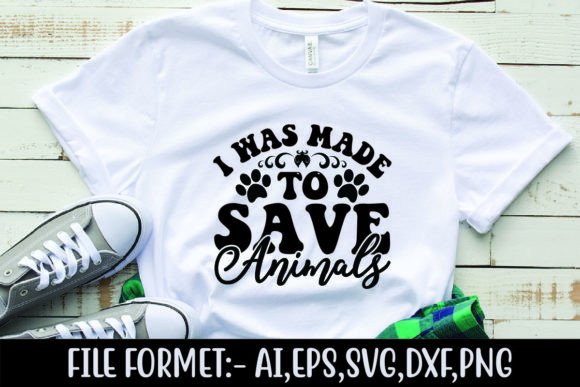
The first impression of I Was Made to Save Animals is one of bold, unapologetic advocacy mixed with a touch of playful charm. The typography suggests a personality that is both modern and deeply human. It does not scream for attention in a chaotic way; rather, it invites the viewer to connect emotionally. For a local business focused on sustainability, ethics, or community care, this mood is invaluable. It feels handmade yet polished, striking a balance that many small business branding projects struggle to achieve. The design suggests a brand that is transparent, caring, and active, which aligns perfectly with contemporary consumer values.
Integrating the Asset into Real Business Scenarios
When I consider how I Was Made to Save Animals fits into a broader design strategy, I look beyond its primary classification. While it is categorized under T-Shirt Designs, its versatility extends far beyond apparel. In my review, I tested this graphic across various mediums to see where it truly shines. For a handmade business selling organic cotton tote bags, this design serves as a powerful hero graphic. It transforms a simple utility item into a statement piece that customers are proud to carry.
In the realm of packaging design, this asset can be used on hang tags or thank-you cards to reinforce brand values. Imagine a skincare brand that donates a portion of profits to wildlife conservation. Placing this graphic on a kraft paper hang tag creates an immediate emotional connection before the customer even opens the product. It supports product label aesthetics by adding a layer of narrative depth. However, it is crucial to maintain visual hierarchy. The text should not compete with essential information like ingredients or usage instructions. Instead, let it serve as a decorative brand element that enhances the overall unboxing experience.
Technical Flexibility and File Formats
From a technical standpoint, the value of any digital product lies in its editability. With I Was Made to Save Animals, you gain access to a comprehensive suite of files that cater to both novice creators and seasoned professionals. The inclusion of AI, EPS, and SVG formats means that the design is fully scalable. Whether you are printing a massive banner for a local market stall or a tiny sticker for a product seal, the vector paths remain crisp. This is critical for professional branding where pixelation can undermine perceived quality.
The PNG files provided are 300 dpi with transparent backgrounds, which is essential for seamless integration into social media graphics and website banners. I tested the transparency against various background colors, and the edges remained clean, allowing for easy layering in tools like Photoshop or Canva. The ability to change colors is another significant advantage. A creative marketplace buyer can adjust the palette to match specific brand guidelines, ensuring consistency across all marketing visuals. This level of customization turns a static clipart into a flexible component of your design assets library.
Strategic Placement and Brand Presentation
To maximize the impact of I Was Made to Save Animals, consider where it will be seen most often. It works exceptionally well as a focal point on product mockup presentations. When pitching to clients or showcasing items in an online store, a high-quality mockup featuring this graphic can significantly boost conversion rates. It adds a layer of professionalism and intent that generic placeholders lack. For editorial design purposes, such as newsletters or blog headers, the graphic can break up text and reinforce the thematic content of animal welfare or ethical living.
However, there are contexts where caution is advised. This design may not suit formal corporate branding or luxury minimalist brands where subtlety is key. It should also be avoided on crowded product label layouts where legal text and barcodes already compete for space. In low-contrast environments, ensure the color variation provides enough distinction to remain legible. Always test the design in black and white to verify that the core message remains clear without relying on color cues. This is a standard practice in commercial design to ensure versatility across different printing methods.
Practical Notes for Designers and Entrepreneurs
Before finalizing any project with I Was Made to Save Animals, I recommend a few practical steps. First, verify the commercial license terms to ensure they cover your specific use case, whether it is physical product sales or digital marketing. Next, pair the graphic with complementary typography. It works well beside clean sans serif fonts for a modern look or handwritten fonts for a more personal, artisanal feel. Avoid pairing it with overly ornate script fonts that might clash with its straightforward message.
Finally, consider the competitive landscape. Look at other local business packaging in your niche. Does this graphic help your brand stand out? Does it communicate your values clearly? By treating this asset as a strategic tool rather than just a decoration, you elevate your small business branding from amateur to professional. The combination of high-resolution JPGs for quick previews and editable vectors for deep customization makes this a valuable addition to any designer’s toolkit. Whether you are creating SVG design elements for web use or preparing print-ready files for a printable design campaign, this asset offers the flexibility needed to succeed in today’s visual marketplace.